Portable Play
Adaptable, flat-pack play structures for communities in transition
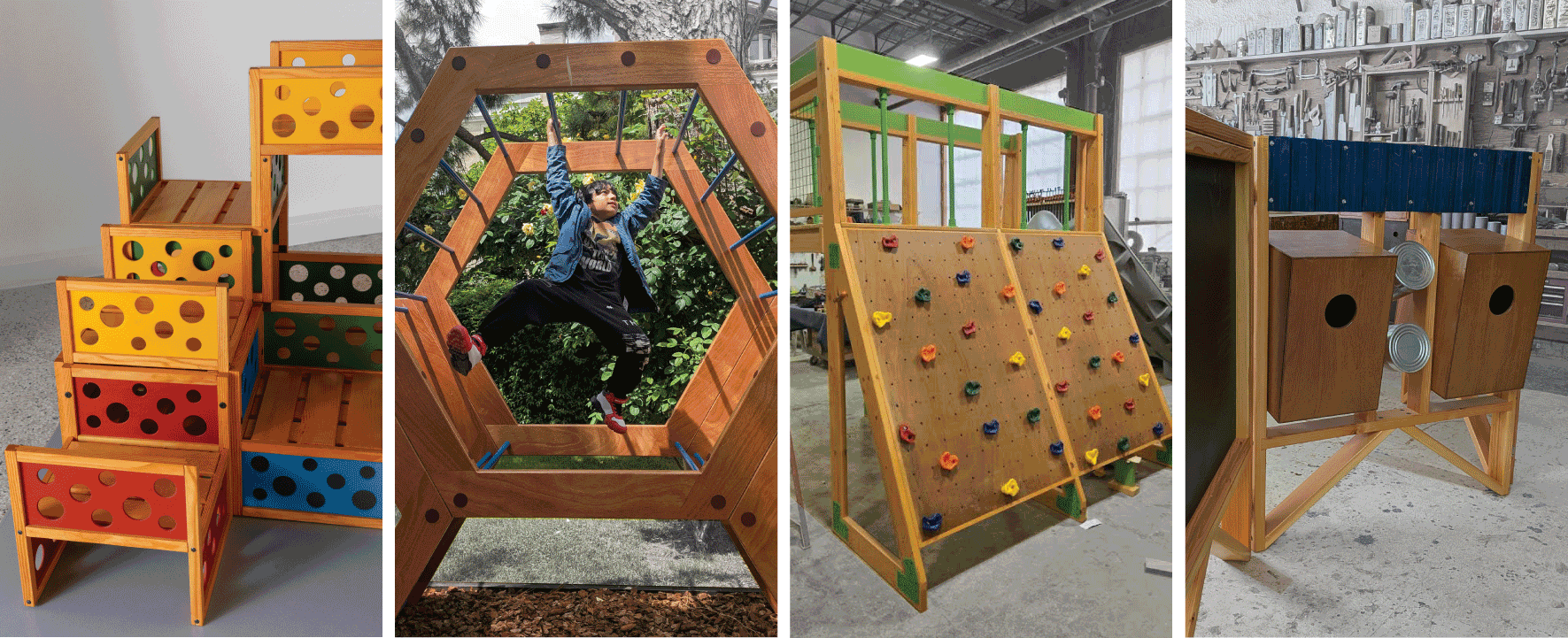
The primary objective of the Portable Play initiative is to give agency to children living in temporary settlements locally and across the globe with modular, replicable play structures that can be flat-packed and easily moved to displacement settings where children live.
Project Status: Pilot implementation in local and global settings
Timeline: initiated in 2023
Funding Partner: Schooner Foundation
Local Fabricators: Mitch Ryerson Design and Joseph Sheehan Design
Global Fabricators:
Ukraine fabrication: MetaLab
Jordan fabrication: Muna Bata, Architect, and Fabricators affiliated with Turquoise Mountain
Key team members*: Nathalie Beauvais, Tina Binazir, Shirine Boulos Anderson, Carley Elliott, Diana Khalifeh, Patti Seitz, Mitch Ryerson, Andrii Vorobiov.
*Many volunteers have contributed to the Portable Play initiative
Portable Play in a Displacement Context
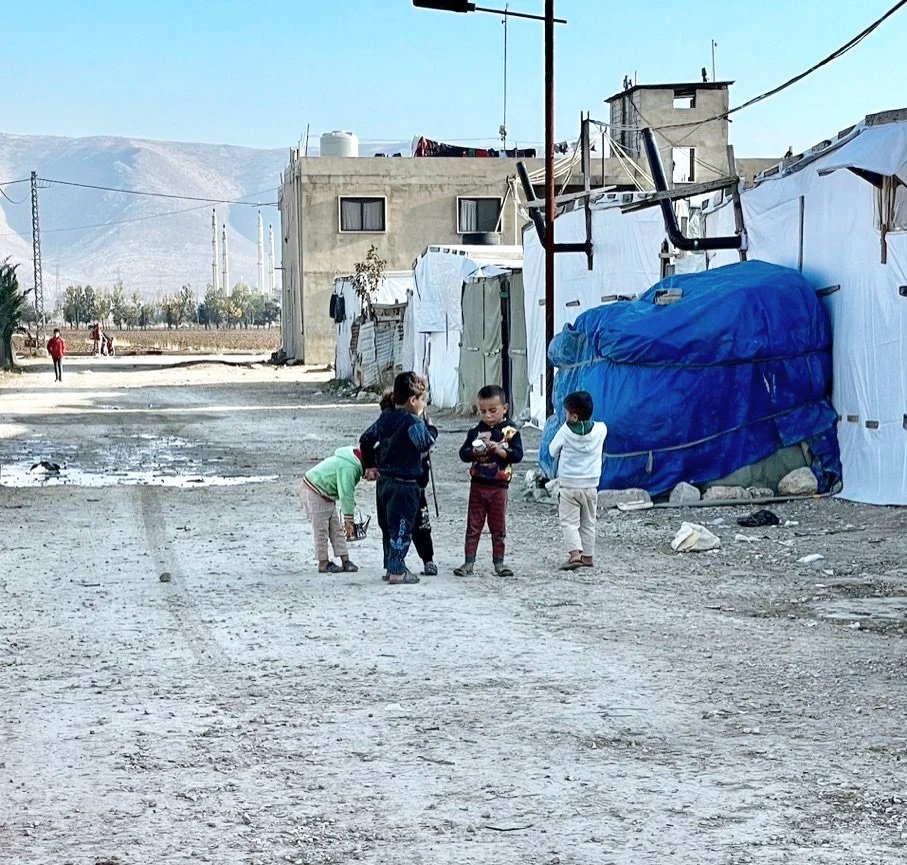
Portable Play creates play opportunities for children living with uncertainty in contexts of displacement, whether in long-term or short-term temporal settlements. It responds to conditions of “permanent impermanence,” where people may remain for extended periods without the ability to build lasting infrastructure. In these shifting environments, Portable Play reimagines the traditional playground by developing systems that can move, adapt, and follow children wherever they are.
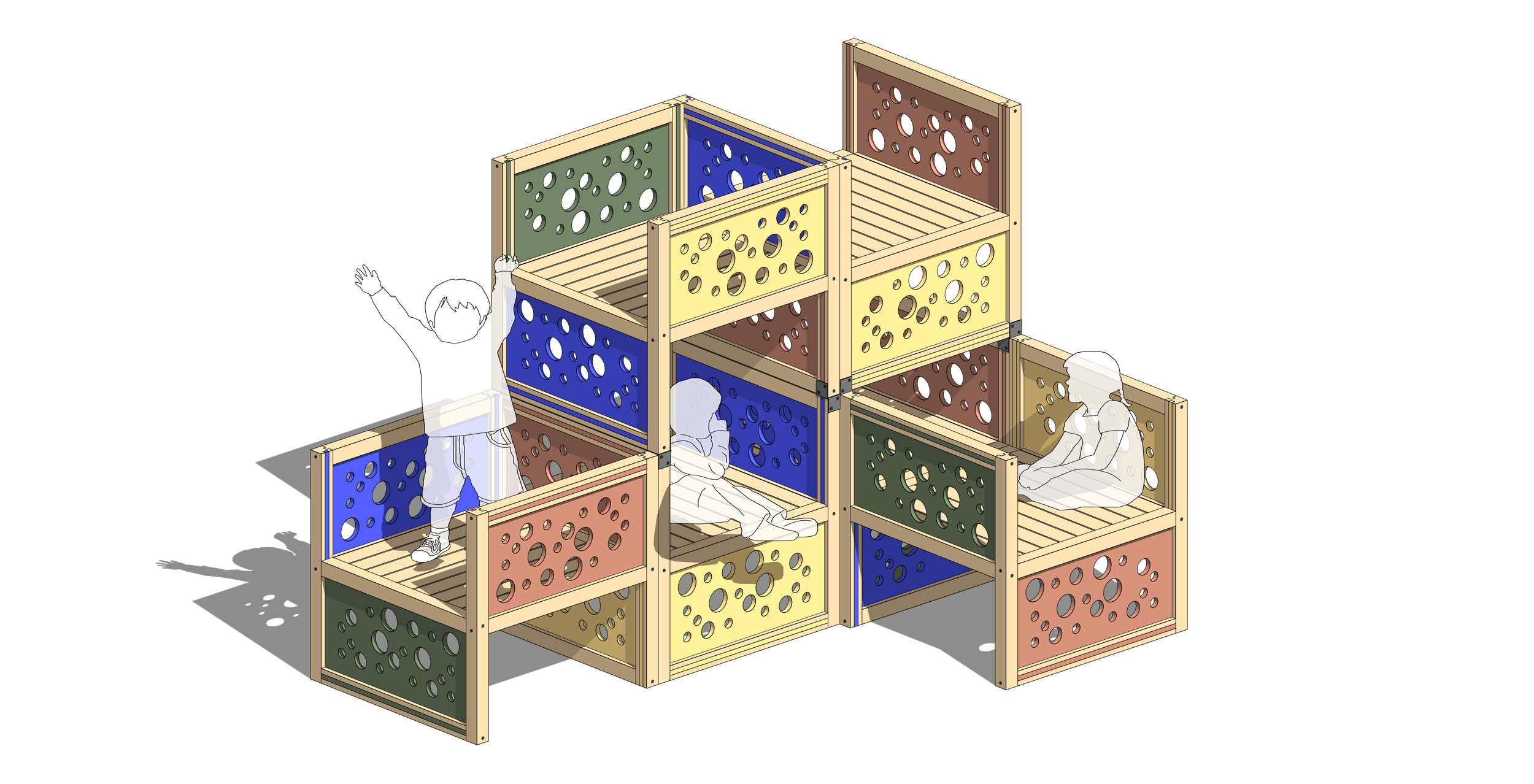
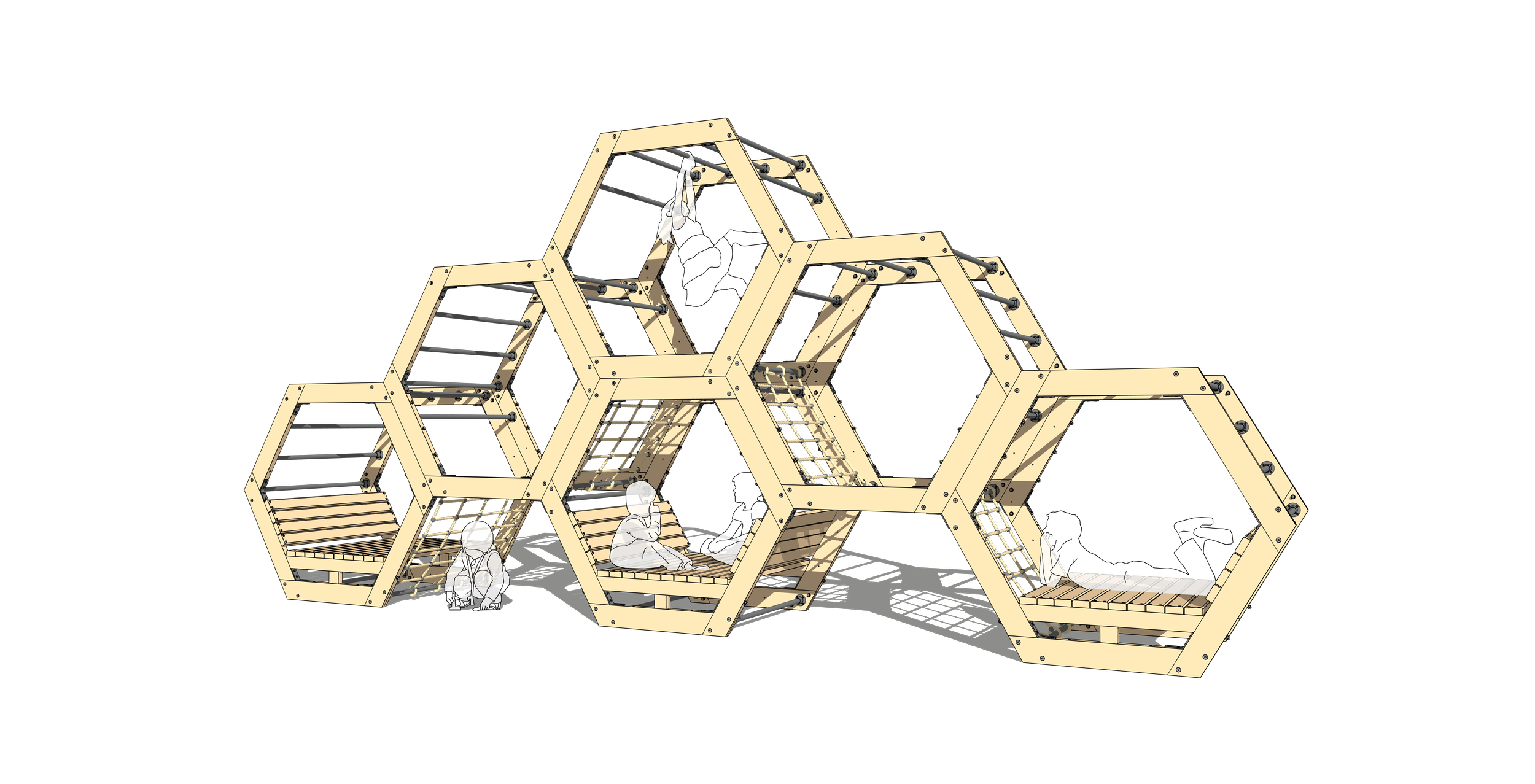
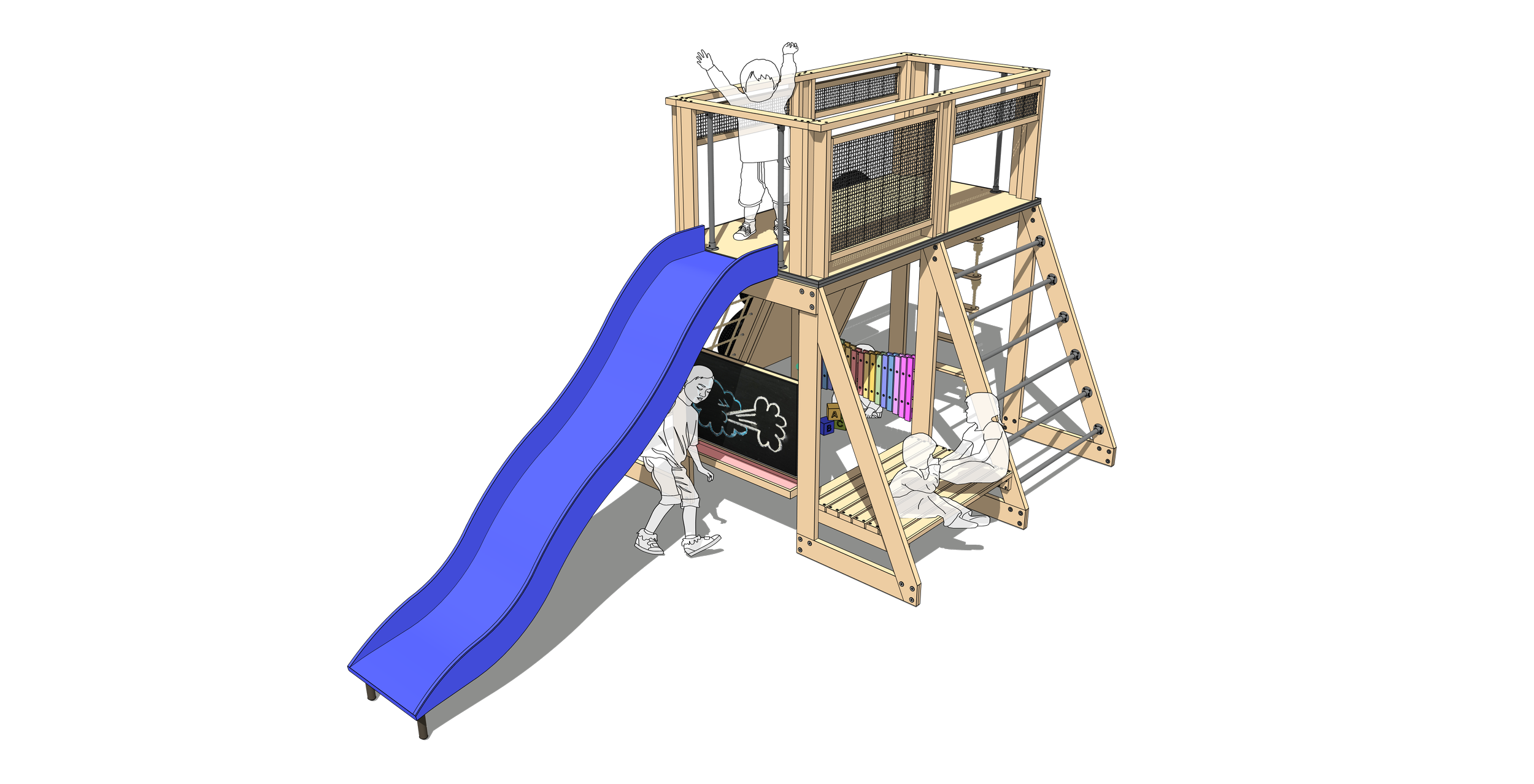
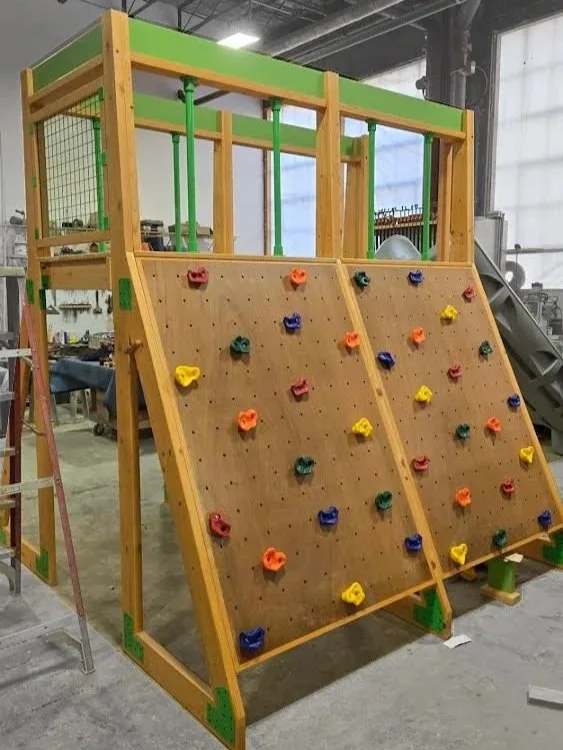
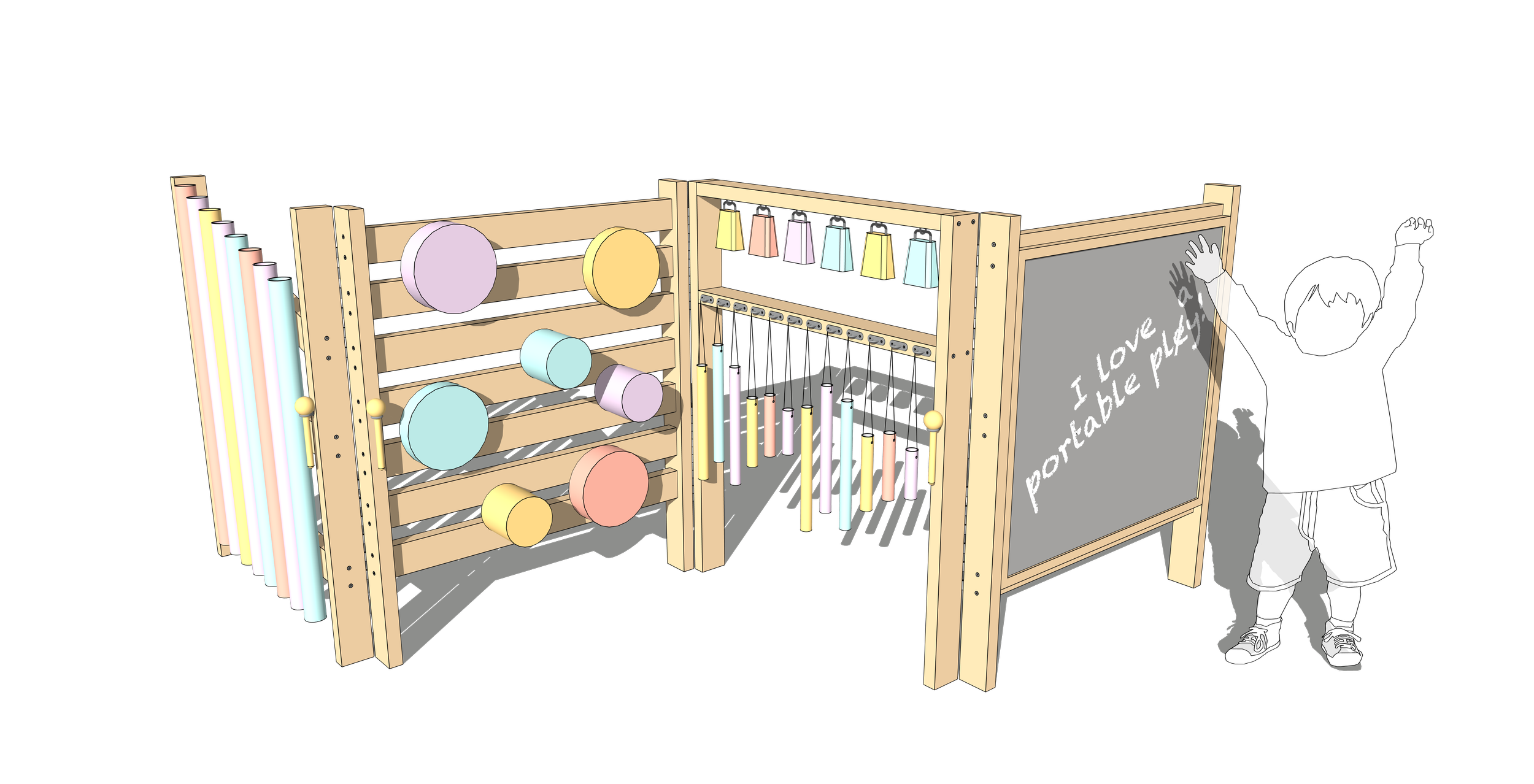
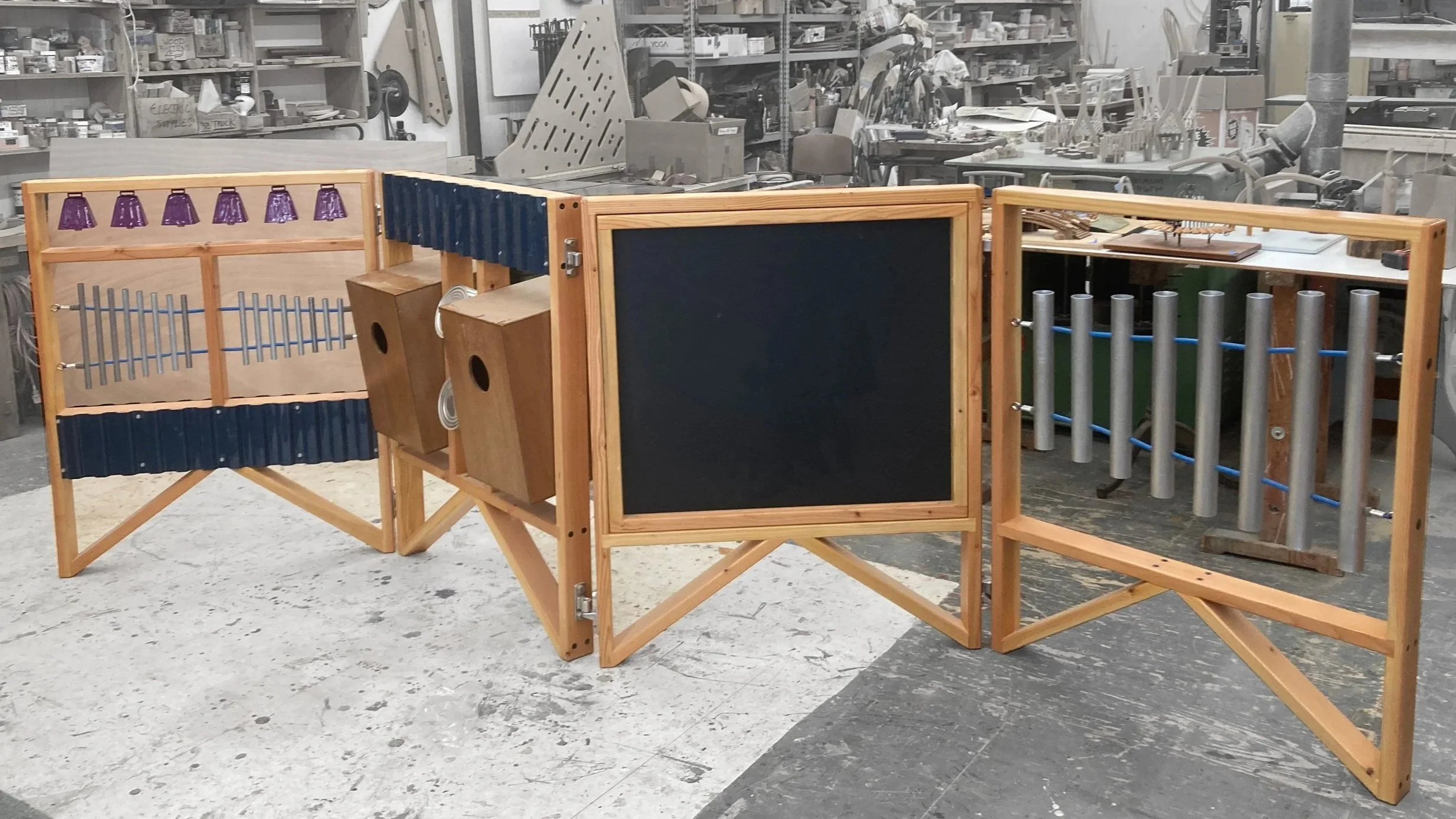
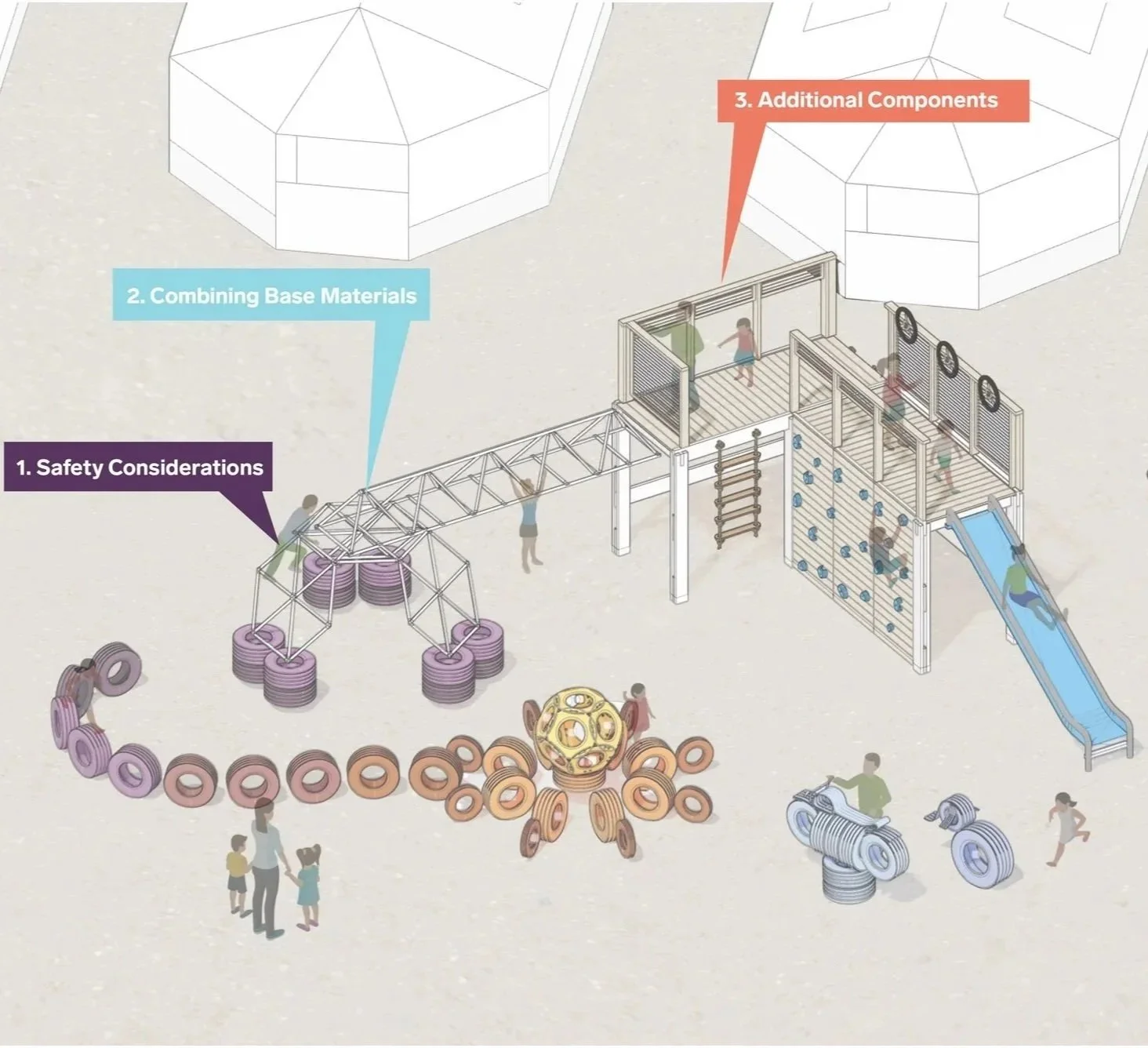
Each design is a modular structural framework that supports interchangeable play components and is designed for safety and ease of assembly and disassembly. Using widely available and durable materials—such as timber, steel connectors, marine-grade plywood, and mesh—the structures can be fabricated locally and adapted with user-configurable elements including ropes, tires, pipes, and sensory features.
Working with underserved communities and homeless shelters locally, the initial prototypes are being deployed in Massachusetts to fill a need for play environments that promote physical activity and imaginative play. The prototypes will be observed in real-world conditions to support further refinement
Working with our partners in Jordan and Ukraine, the Portable Play prototypes are being fabricated for deployment in refugee and permanently housed displaced communities respectively, by the end of 2026.
The Portable Play initiative aims to reinforce community by expanding access to play and creating anchors that support the children’s caretakers living in temporary settlements locally and globally. By creating flexible play environments, the project encourages imaginative play, helping children process and navigate complex and often unstable conditions. At its core, Portable Play seeks to provide not only spaces for activity, but also opportunities for agency, expression, connection and healing.
Community, Access, and Benefits
Genesis
The Portable Play concept emerged from site-driven challenges identified across several of our preceding projects, specifically in Lebanon and along the U.S.–Mexico border. We learned that host countries of refugee and asylum-seeker encampments forbid the use of foundations, which reflect a sense of permanence to these shelters. These limitations around permanence and infrastructure prompted a rethinking of what play spaces could be. Rather than designing fixed play structures with foundations, the Portable Play initiative envisions stable modular systems that could be nimbly moved with shifting temporary encampments.
Design Criteria
Design parameters were established to inform potential concepts: the designs must be modular, adaptable, conform to U.S. Playground Safety Standards, easily erected and/or disassembled, and be adaptable to different contexts using regionally available materials.
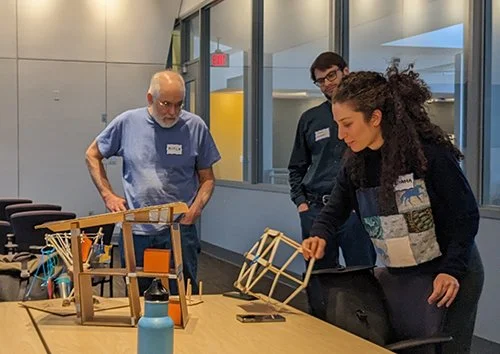
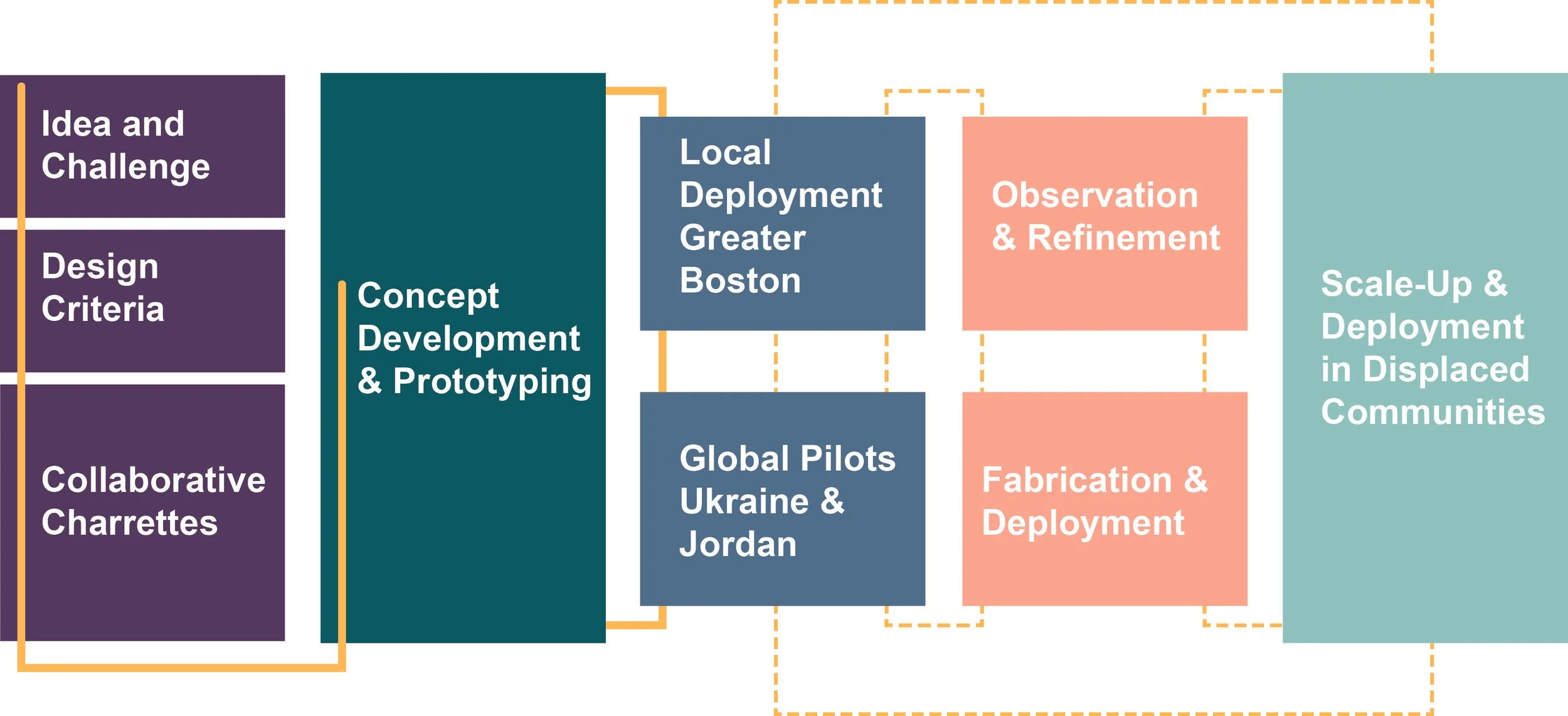
Collaborative Design Charrettes
To inform the process, a Virtual Roundtable held in February 2023, brought together experts in trauma-informed care, expressive arts therapy, somatic movement, landscape architecture, and humanitarian engineering to explore the role of play in supporting children affected by displacement.
This was followed by two design charrettes held in Spring 2023 and Winter 2024 with design practitioners, students, and collaborators. Through these sessions, ideas were tested, refined, and expanded.
Concept Development & Prototyping
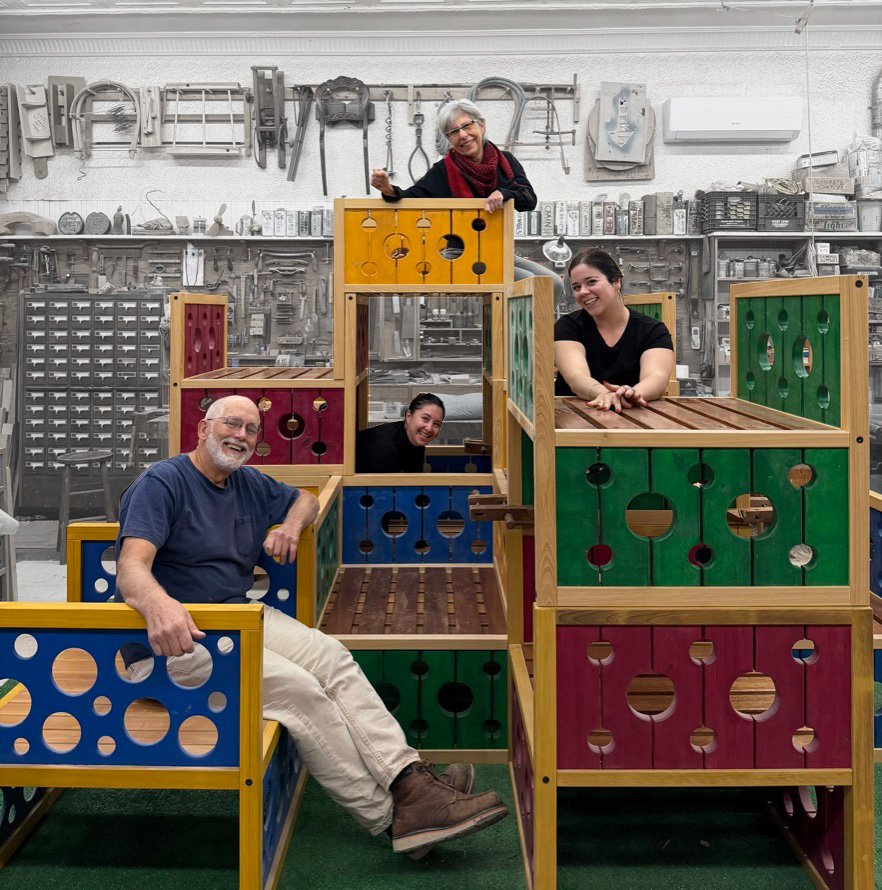
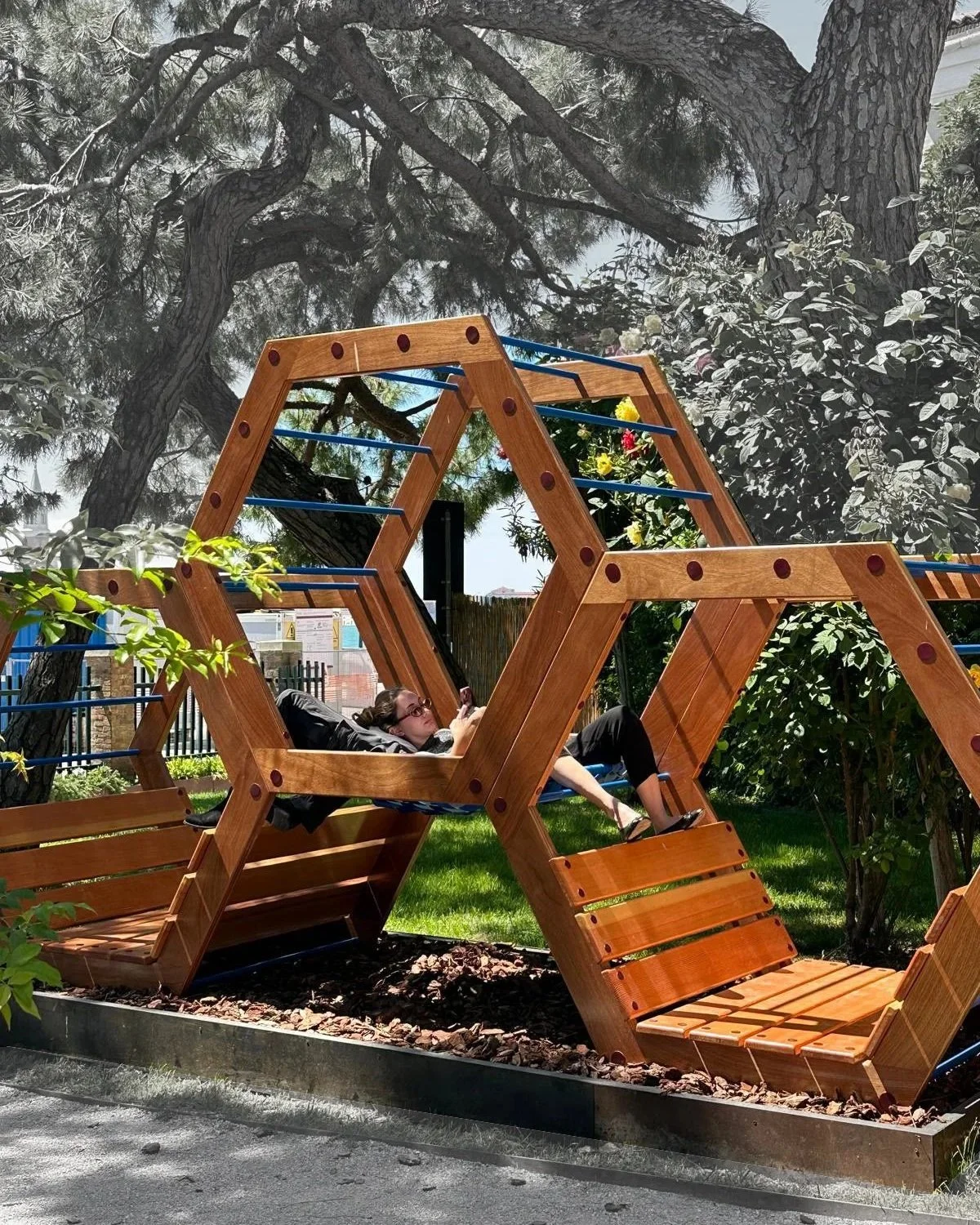
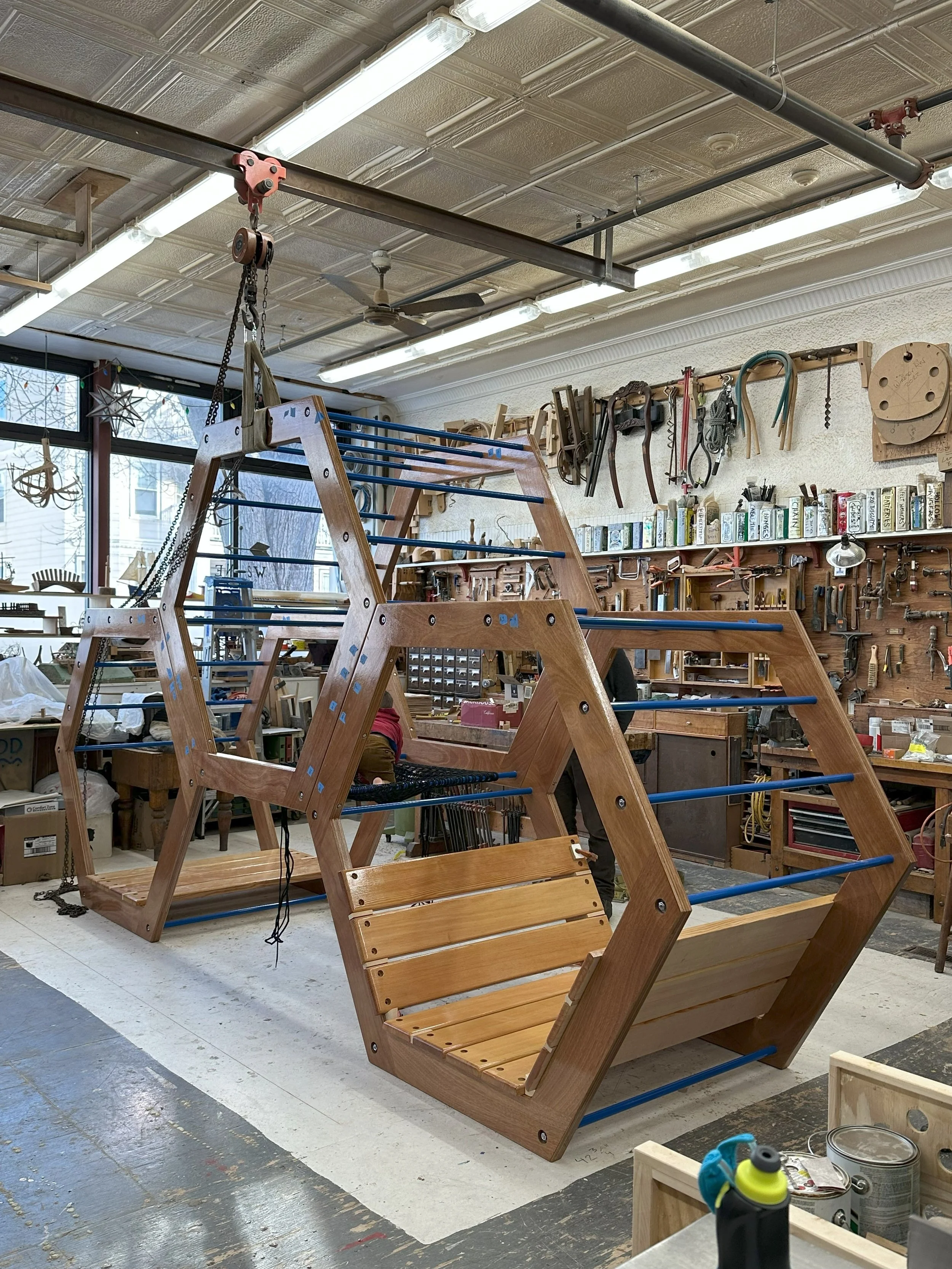
Four core concepts were selected for further development and full-scale prototyping. Each design was refined through drawings, fabrication, and iterative testing, allowing the systems to evolve as they were prototyped. A certified playground safety inspector reviewed the prototypes to ensure safety and performance. This feedback is currently being integrated, with the understanding that these four designs are a starting point for continued exploration, including future work on inclusive and accessible play for children of all abilities. See Design Concepts >


To share the work with broader audiences, two prototypes were exhibited in Venice at the European Cultural Center’s Time Space Existence exhibit during the 2025 Venice Biennale, along with a public discussion on portable play, reuse, and regenerative design. Read more here >
Local Deployment in Greater Boston Area
The project is in the process of local deployment in public spaces located in underserved communities and homeless shelters in the greater Boston area. This phase will include observing in real time how the children engage with the structures to inform further design refinement.
Global Deployment
In parallel, pilot projects in fabrication overseas will be deployed in internally displaced resettled communities in Ukraine and refugee encampments in Jordan.
From Design to Fabrication

We are grateful to the Schooner Foundation for its unwavering support, funding, and network, which have made this work possible.
Special Thanks